

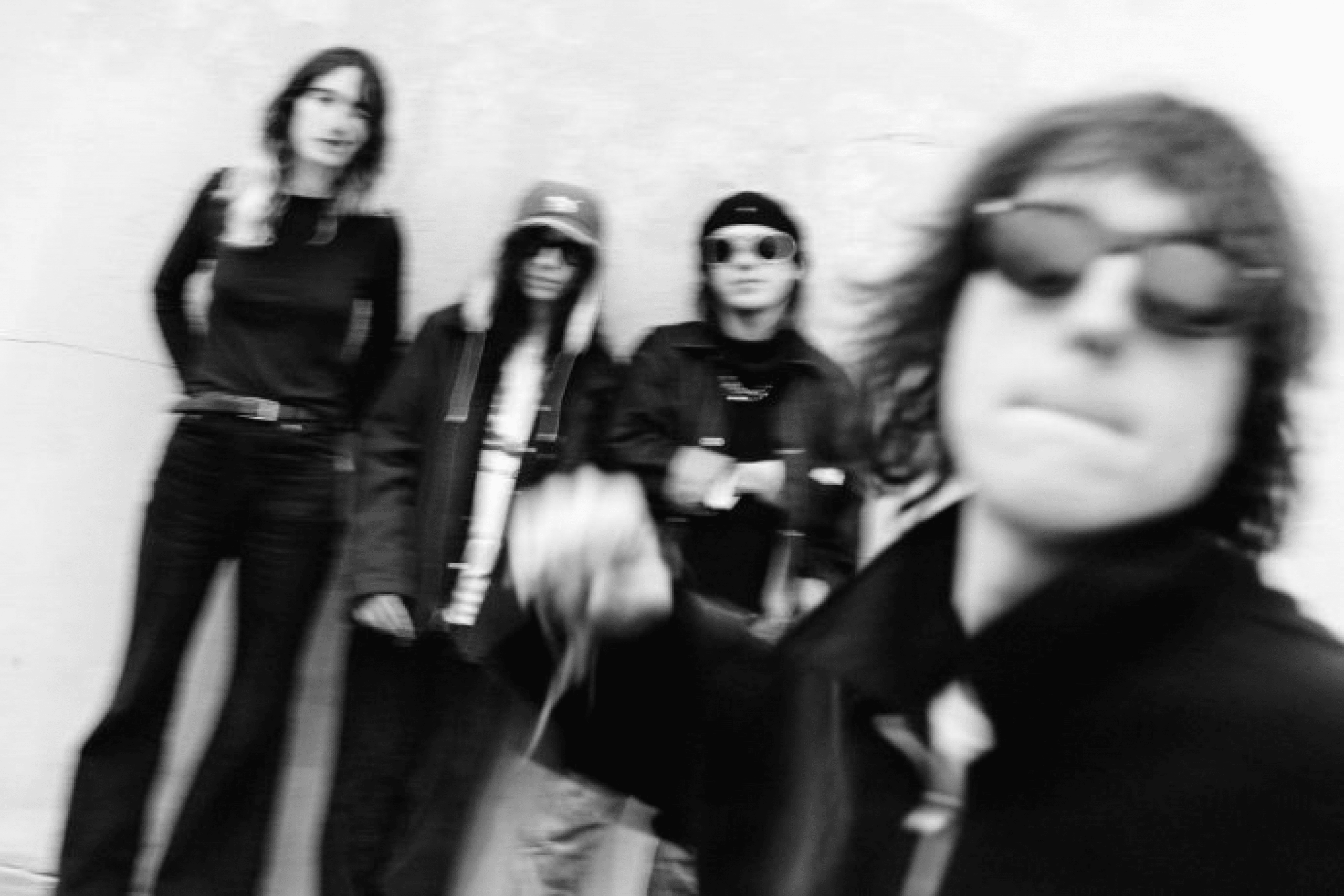

I told my friend I was going to the Geese show. He proceeded to pick up his pint and slowly pour it over me inside the pub whilst chanting “shame”. Having taken my phone to text my whole family saying I never loved them, he rounded it all off by smashing the remainder of his crisps into my face.
Walking down the road, sopping wet and dishevelled, someone asked me what on earth had happened. Having explained, they provided refuge, a change of clothes, and a warm meal for recovery. “Any Geese fan is a friend of mine, all hail Cameron Winter, our lord and saviour”.
As I sat in this Geese-induced mess, something occurred to me. I really need to find new friends.
Hailing from New York, the city that brought us everything from The Strokes to Sonic Youth. Gen Z’s guitar music saviours have arrived. Arrived again, whilst being far from new, their third studio album, Getting Killed, has flipped the music world on its head. Catalysed by the success of Cameron Winter’s solo album, the band’s latest work arrived in late September. Since then, they have been catapulted from being respected with a loyal fan base, to splitting opinions with more vigour than a tasty would you rather at an afters.
So why are we all meant to hate Geese? Or worship the very ground under which they walk? When anything is lauded this highly, it’s bound to face derision. The natural, uncontrollable contrarian in all of us wants to make one’s own conclusion. BRIT awards, Pitchfork 9.0s and a new cultural phenomenon. We’ve seen this before over the last five years: BRAT Summer from Charli XCX, a Romance summer from Fontaines DC. When you take off and gain traction in this day and age, social media and streaming work like fire and gasoline. You can’t escape the craze, and this will inevitably alienate people. What’s different about the Geese craze is the level of polarisation involved.
Whilst previous crazes could be described as popular, talking to people at gigs and being involved in music, it feels like a 50/50 split for or against. As previously discussed, the extent of these opinions is usually severe.
Their open-air Brooklyn show around the release of the record felt and looked like a watershed moment for modern guitar music. In the music industry, timing is everything. The band of a generation bloomed in front of their peers on the streets of NYC, a seminal moment. Everything the group had done led to this moment; it all slotted into place.
The BRITS acceptance speech from drummer Max Bassin should go down in folklore with Turner dropping the mic and the 90s boxing foreplay. Bassin’s crucial message compared to the whimsy of the aforementioned moments is poignant. The times have changed, the stakes have grown.
Despite all of this, it seems people’s personal affinity with the band is far more important than what the musicians themselves are doing. An individual’s views on Geese have become a sort of musical zodiac reading. An apparent indictment of essentially the whole of what a human can be boiled down to. The sweeping declaration, Geese in or Geese out, subtle narcissism in all of us rising. Outside the hullabaloo, it’s easy to forget that they released a couple of tunes.
Going to see them live cuts out all of that outside hysteria. A one-on-one with you and the band. Whilst this media raucous blares on around them, it’s all so much simpler in person. A group who matter more than anything at this very moment, playing to an adoring audience. An explosion of youth, expression, fearlessness, apathy, passion, love, nihilism, acceptance, fear and vitality.
Through three LPs, they’ve honed their craft, not out of nowhere, through development and natural progression. A front man ethereal by nature, looking like he was sculpted on the very stage for this precise moment in time.
Yes, Au Pays du Cocaine can rub people the wrong way. Winter’s voice is not as instantly endearing as previous ‘saviours’ of the genre, when compared to Casablancas’ rasp or Turner’s earnest delivery. When given time, however, it becomes a celestial wail, synergising with Emily Green’s swashbuckling stadium guitar riffs. 100 Horses rips across the pile of perspiration and limbs, the euphoria of taxes erupting, the drive of Islands of Men.
Meaningful philanthropy, a charismatic frontman, and truly fantastic songwriting by talented musicians. Geese have all the elements to take over the world: the right people, in the right place, at the right time. Yet something feels different to when all the pieces fell into place in other instances. I wasn’t around when The Strokes swooned in to save us in the 2000s. Researching their impact, it seemed far more galvanising for a generation, compared to the divisive success Geese are experiencing.
The world is not what it was 20 years ago; times always change, but rarely as starkly as one that is now lived out through social media instead of reality. Everyone is penned into categories, sub-genres sprawl wider than we can comprehend, and controversy reigns king. Geese’s legacy as the band of a generation can be perfectly illustrated by their reception. A generation more nuanced, fragmented and disconnected than any before it. Where people look to drag down for engagement or boost their own defiance against the machine that is pulling us all apart in the first place.
This is the fundamental reason going to a Geese show can result in someone reacting like you’re a flat earther. No, I didn’t go to join a group that specialises in rescuing puppies. I went to see a band, an incredibly important and talented band, who deserve any praise that comes their way. Any of the disdain thrown their way is far more likely to be self-projected by the individual than having anything to do with their art.
The impact of this album being toured will be seen for the next decade to come. England’s most exciting band, Westside Cowboy, played to a venue roughly 95% bigger than they took to this time last year. A vital platform, and one of the more important support slots in recent history. They, too, will have impacted the audience with similar poignance and consequence. It doesn’t seem far-fetched to assume many of the artists who will contribute to guitar music over the next period were in attendance at this show. Many established ones are recognisable in the sea of sonic limbs. Those with the autonomy to set aside the outside noise and listen to the noise being delivered by Geese.
