

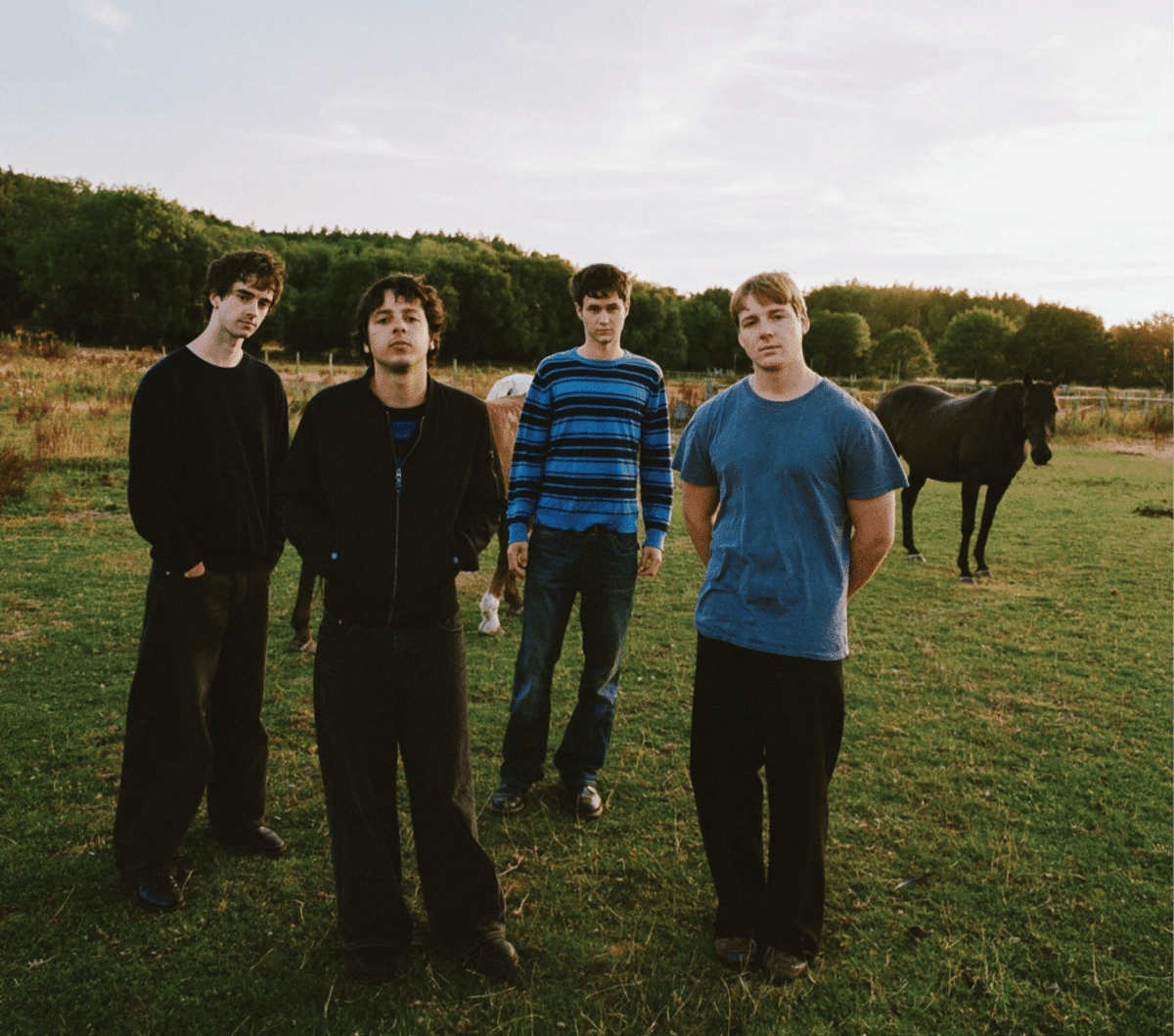

Radio Free Alice’s debut album, “What’s In Between,” arrives Oct. 30, and seeks to combat indecision with infectious, persuasive indie rock inspired by long-standing genre influences.
The Melbourne-formed band’s 11-track release relies on direct lyrics, well-arranged instrumental lines, and a hint of melodramatic flair to coax listeners out of indecision-fueled stagnation.
“Crying With You” opens the album with commanding guitar motifs and intense bass notes that boost Lochie Dowd’s bombastic percussion rhythms. Each line stands on its own and could easily assume a leading role in an alternate arrangement.
Like many of the album’s tracks, “Crying With You” exudes an irresistibly danceable energy while unabashedly voicing a string of connected frustrations.
Its self-aware lyrics emphasise specific social hardships while voicing a need for dancing and laughter to balance out tough times.
Occasional quips challenge this social state of being and its associated norms with masterful snark; clean, clear vocals defiantly declare lines like, “I’ll be fashionable for exactly five minutes.”
These honest lyrics carry into “Undressed,” which takes on an 80s anthem tone.
Every instrument accentuates another. A clap-like 80s staple rhythm and low synths contrast with an enticingly imperfect rock guitar line. Combined, these elements amplify the under-varied yet pleasant vocals.
Vocalist and guitarist Noah Learmonth opts for a naturally flowing, invitingly raw vocal style.
In speaking to someone who lost their girlfriend to another person, he doesn’t hold back.
He pushes them to evaluate their options and commit: either express their feelings, if they genuinely go beyond physical attraction, or let her go and stop lusting in the distance.
“Rule 31” describes a different kind of loss caused by painful past experiences that keep people “tied to the tracks,” fearful, and grieving lost time.
While the song’s subject matter feels expertly crafted, its execution pales in comparison and feels disjointed.
The vocals get mushy and lag behind the tempo, and the concept of freeing oneself from being a slave to scarring memories is fragmented and scrambled.
Learmonth and Jules Paradiso-contributed guitar lines steal the show, and the band’s precision feels exceptional, like every line is tightly interlocked. However, the overall track lacks consistent intrigue.
The titular track “What’s In Between” sees the simplistic guitar and percussion maintaining their interwoven state.
High-energy, indie-inspired looping components and a lyrical sense of impatience give this song a Say Anything boombox-scene mood. Learmonth exasperatedly repeats “oh, come on” and asks endless questions that all lead to his biggest: “there’s something between us, what is between us?”
Once the synth and attention-grabbing electric guitar kick in, “What’s In Between” becomes this album’s most striking display of Radio Free Alice’s capabilities.
“Kick in the Shins” fervently leans more into what “Rule 31” introduces; it explores the ways absence, aggression, and rejection can affect those who endure them.
Michael Phillips’ menacing bass line carries this overly simple arrangement. Vulnerable lyrics describe how being the “weird” kid of an aggressive, absent father leads to a sad adulthood, spent singing “on Radio 1, crying out loud” and feeling rejected.
Learmonth’s monotone, spoken punk vocals don’t reflect this song’s lyrical power and intensity, making it an overall skip-prone song.
“Big Ideas (feat. Rachel Brown)” offers a more well-rounded instrumental experience full of sweet, simple moments. Cute, rhyming lyrics, supported by dreamy “ahs” and an overall resonant unity, add substance to what feels like a deeply human interaction.
The song expresses a need to escape the mundane, which is punctuated by octave splitting, alternating guitar sections that unfold into distorted shredding. While it sounds pleasant and full of flair on paper, the track is plain because of over-blended bass and Brown’s sparse vocals.
“Lunch Money” offers a similarly simplistic sound that’s arranged to match the drab, routine lifestyle the speaker disapproves of.
The guitar struggles to find its place until it echoes the melody, and the vocals seem strained, but these drawbacks fail to fully detract from the song’s enjoyable similarity to “Mr. Brightside” by The Killers.
In theme, “Bottleshops” is an in-your-face sequel to “Lunch Money”; it focuses on external judgments about not adhering to a cookie-cutter lifestyle on time and needing to “pull yourself up by your goddamn bootstraps” to avoid living in a basement at 30.
The track bears a lot of similarity to the others before it, carrying a tone almost too nagging and retaliatory to enjoy.
“Four Leaf Clover” takes on a milder boldness, pairing vocal distortion and guitar squeals with cheesy 80s synth. While it lyrically feels as enduring as the speaker’s relationship with someone denying their fading feelings, the band’s sonic choices feel incredibly deliberate.
80s soundscapes prevail on “The Intersection,” this time taking on a new-wave, Simple Minds-channeling sound.
Radio Free Alice reintroduces their signature instrumental variety, prioritising hyped drum lines that contrast a drawn-out bassline.
While the track’s guitar lines feel enduring and offer momentum, the more monotone vocals feel sticky and stagnant but lyrically convey self-deprecation well.
The album comes to a close with “Waiting,” a warm, textured ending with the big role of wrapping up a welcome cacophony of insightful themes.
It recognises a world full of “tasteless people with very kind hearts” who aren’t the high-profile royals or VIPs they pretend to be.
Low-octave moments make album-wide references to indecision-driven rebellion melodramatic, but these decrease as the song’s overall casual tone brings it to a satisfying end.
What’s In Between presents Radio Free Alice as a band with great chemistry, lyrical aptitude, well-established sonic sensibilities, and a willingness to learn from their roots.
Their sometimes-excessive ambition and passionate analytic perspectives on the human condition demonstrate growing credibility.
While it’s uncertain where this debut will take them, their work is certainly worth consideration, especially from those stuck in their own in-betweens.

