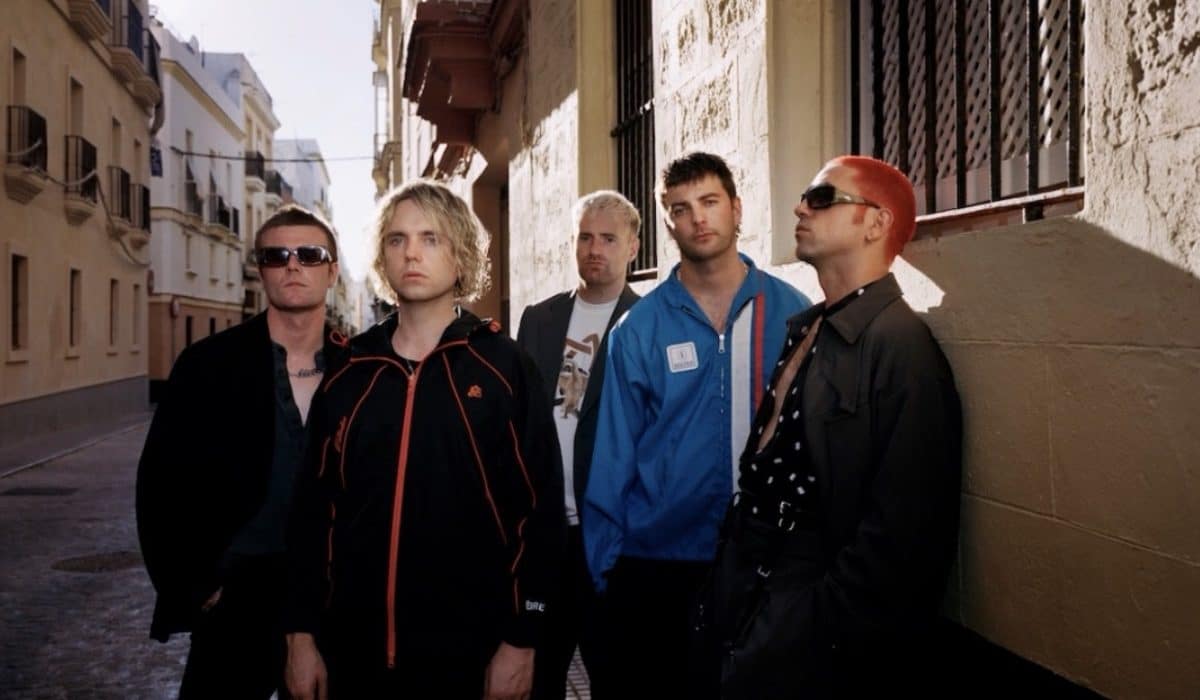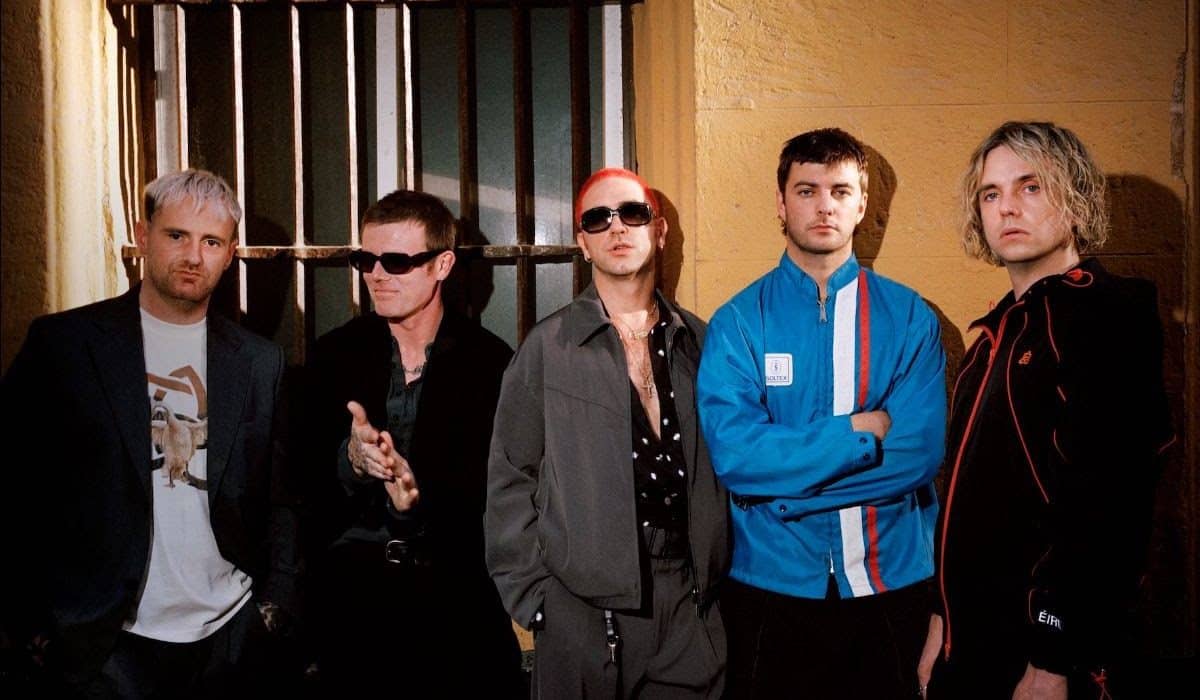


By the time Fontaines D.C. announced their fifth album, Dopamine Chamber, they had already reached a level of success that would have seemed improbable only a few years ago. An arena tour sold out within minutes, followed almost immediately by a stadium tour announcement. The trajectory is ridiculous, but so is the confidence with which the band now seem to occupy their space. Dopamine Chamber arrives sounding like a band that knows exactly how far it can push itself and, more importantly, how much further it can take us.
It begins with ‘Six Shot Morning’, a track that has become a staple of the Fontaines live set in recent months. A luminous Prophet synth quickly curdles into something more sinister, swallowed by heavy bass loops as Grian Chatten’s voice floats above it all: “Silicon Valley took a photograph,” he drawls, before later offering, “You and I living for a million years, always, always.” The song is steeped in the particular numbness of doomscrolling, where synthetic media and ecological collapse arrive on the same timelines as meme humour and celebrity gossip. When the song finally collapses into its final ninety seconds of noise, there’s no release waiting on the other side, just overload.
Then comes ‘Marianne’, which pulls the record somewhere altogether more elusive. The guitars recede beneath sweeping strings and shimmering tones, giving the song an almost unreal grandeur. Faintly threatening, lurking beneath its surface beauty, like a perfectly composed scene that has begun to feel wrong around the edges. Chatten recounts endless hedonism and escapism with the same detached sneer he might use to describe something much more mundane, turning pleasure into something vaguely sinister. The song doesn’t sound like Fontaines abandoning what came before so much as deliberately obscuring it.
They haven’t forgotten how to make the guitars hit, though. ‘Demolition’ snaps back into focus almost immediately, its distorted vocals and biting guitars carrying the album’s sarcastic streak. “Have the prettiest day, if you want me I’ll stay,” Chatten sings on its impossibly catchy chorus, before the sweetness turns sour: “Every time you are from me you wish I was there.” The track latches itself into your head, but there’s a slight poison underneath it, the sweetness of its melody is at odds with the resentment in the lyrics.
If anything, ‘Japan’ takes that idea of restraint even further, leaving Chatten alone with an acoustic guitar. It has the loose, scruffy feeling of something that might have wandered over from Chaos for the Fly, with Chatten delivering some of the album’s saltiest lines with an almost mischievous ease: “Every time they fuck she leaves her body for a while, and he says thank you without a smile.” The song never seems particularly interested in dressing up its ugliness. Instead, it circles around its refrain, “Why’d you go and make it weird?”, until the line morphs into an accusation rather than a question. For an album so interested in scale, its smallest moments can be the most revealing.
The door is swung back open on ‘One Man,’ a colossal string arrangement gathers underneath Chatten as he sings, “Dopamine Chamber just trying to kill the pain / You can’t escape the feeling once you’ve given it a name.” The sense of claustrophobia carries through, the album’s title becoming a diagnosis rather than a concept. The strings swell grandly but never quite become triumphant, then fall away. In their place comes the sound of children shouting and playing football outside of Palermo Cathedral, picked up in the recording as if a window has suddenly been left open. Their voices are distant and indistinct, yet change the song completely, a track about numbing yourself interrupted by evidence of being truly alive.
The album’s expansion reaches its most unexpected point on ‘Where Is Gone?’, the band’s first collaboration with ROSALÍA. Its loose, waltzing rhythm recalls Lee Hazlewood and Sinatra, with Chatten and ROSALÍA passing lines between one another as they pick over the remains of a relationship. It’s another reminder that Fontaines are increasingly comfortable letting space and restraint do the work once occupied by distortion.
As Dopamine Chamber reaches its conclusion, Fontaines D.C. have pulled themselves in every direction. ‘Intimate’ closes the record in a haze of shoegaze guitars, Chatten and Deegan repeat ‘dying, dying, dying, I’m dead’ until the words lose their meaning. For the album’s experimentation, there’s a reassuring familiarity here, a faint echo of the band they were before the arenas and stadiums.
The album fades out in an ambiguous haze, leaving more questions than answers in its wake. Perhaps that uncertainty is part of what makes Fontaines D.C. so compelling; five albums in, they still seem unwilling to settle into a version of themselves. Dopamine Chamber is the sound of a band at the height of their powers, with nothing left to prove and no reason to stop pushing forward. Rather than offering any neat resolution, it leaves the door open, a fitting end for a band whose greatest quality has always been the sense that they could go almost anywhere next.